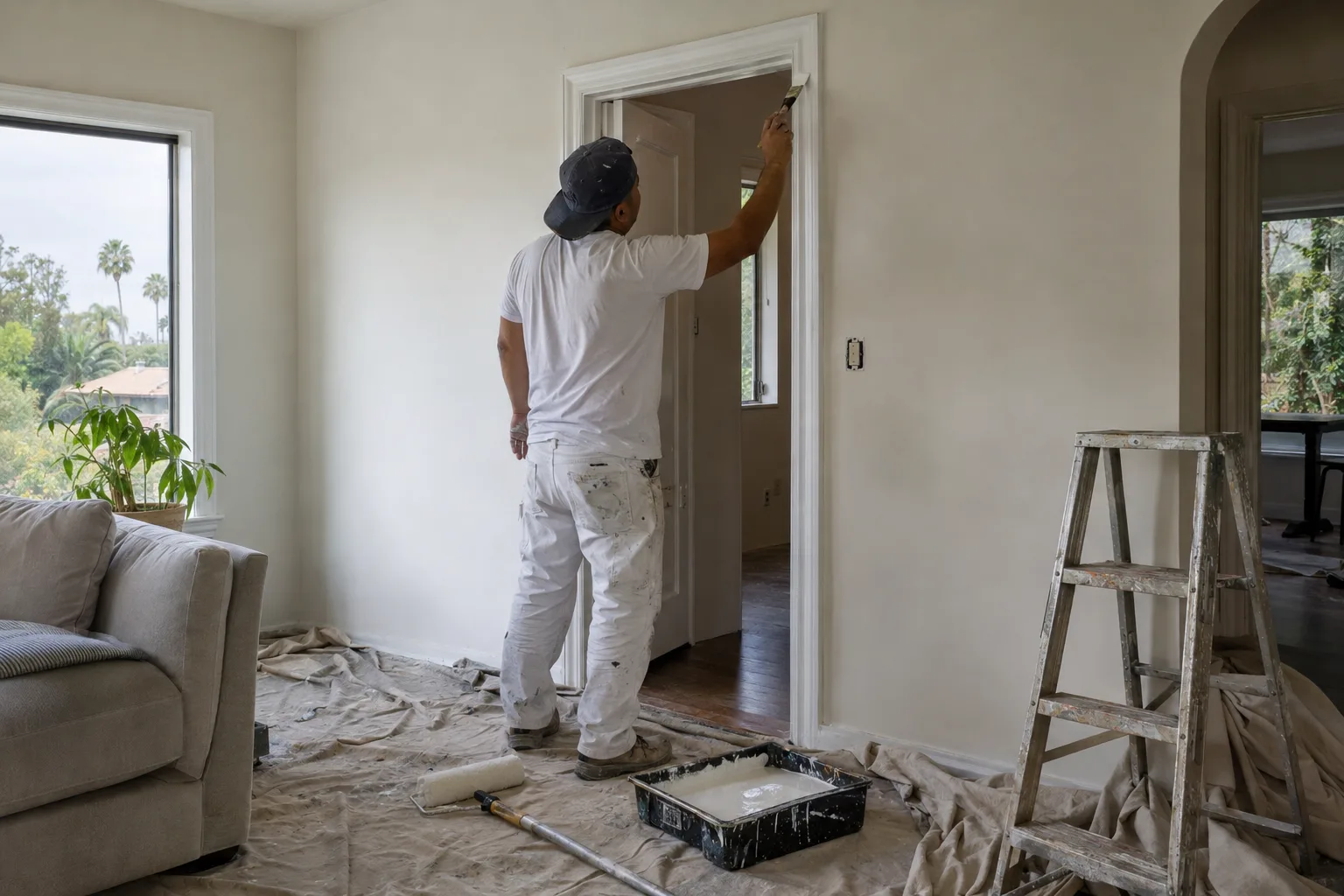
One team handles repairs, priming, and painting - no gaps between trades.
What Goes Into a Clean, Lasting Interior Paint Job
Interior painting is a surface preparation trade first, and a painting trade second.
Surface preparation (the process of patching, sanding, and priming a wall before paint is applied) is where lasting results are built. Skip it, and every imperfection under the surface shows up under the finish. Do it right, and a painted room can look clean for years without peeling, cracking, or going patchy at the edges.
At Remodeling & More LA, interior painting is handled by in-house crews who also do drywall work. That matters. The same people who patch a wall are the ones who paint it.
Painting Finish Work Across Los Angeles - From Studio City to Long Beach
Los Angeles interiors take more daily wear than most homeowners expect.
Our crews dispatch from Studio City out across the full Los Angeles service area. That gives us a realistic picture of what local homes deal with.
Los Angeles doesn't have cold winters, but it has something harder on interior paint - constant use. Cooking steam in open-plan kitchens, ceiling fans running most of the year, walls that get touched daily in hallways and near light switches. These are the spots where a paint job without proper priming fails first.
In older neighborhoods like Pasadena and Culver City, plaster walls with hairline cracks need different treatment than newer drywall. In Santa Monica and West Hollywood, higher humidity near the coast affects how primer bonds if the surface isn't clean and dry first. Knowing these differences before the roller comes out is part of doing this work well in Los Angeles.
A Call We Often Get After a Quick Coat Starts Showing Its Age
A paint job that skipped prep doesn't fail all at once - it fails gradually, in the worst spots.
A call we often get goes something like this. A homeowner had their interior painted a year or two ago. It looked good right after. Now the kitchen has roller marks showing under the overhead light. The hallway near the front door is scuffing and fading. The trim around the bathroom door is chipping.
When we walk through a space like that, the issue is almost always visible before we ask a single question. The sheen looks uneven - which usually means the primer coat was either skipped or applied unevenly over a surface that wasn't sanded. Trim chipping around doors and baseboards typically means the surface wasn't deglossed before paint went on. Adhesion - the bond between paint and surface - depends entirely on what was done before the first coat.
The color is rarely the problem. The prep is.
What changes with a full preparation process is straightforward - the paint has something solid to grip. It applies evenly. It dries to a consistent sheen. And it doesn't lift, crack, or wear through at contact points within a year.
When we take on an interior painting project in Los Angeles, we start with the wall - not the paint.
Surface Defects Get Fixed Before the Roller Comes Out
Every crack, nail pop, and uneven patch gets corrected at the wall level.
A common question: can paint just go over small cracks?
Paint can cover a hairline crack - for a while. But paint is not a filler. It flexes slightly as a home settles, and a crack that wasn't repaired will telegraph back through the finish coat within months.
Our process addresses defects before any paint is applied. Nail pops get set and spackled. Cracks get taped or filled depending on depth. Uneven texture from previous patchwork gets sanded to match the surrounding wall. The goal is a surface that looks consistent in every lighting condition - not just in normal light, but raked light too.
That's the standard we hold on interior painting in Los Angeles whether it's a single room or a whole house.
How We Prepare, Prime, and Apply - Room by Room
Consistent finish quality comes from a consistent process, applied in the right order.
Every room gets its own walkthrough before work starts. Here's what that includes:
- Surface assessmentWe check for cracks, nail pops, water stains, texture inconsistencies, and adhesion issues from previous coatings.
- Repairs firstDrywall patches, joint compound, and sanding happen before any protection or primer goes down.
- Protection and maskingFloors, fixtures, outlets, and trim get protected before any product is applied. Tape lines are cut clean, not applied loosely.
- Primer coatA primer coat (an adhesion layer that determines how paint bonds and holds) is applied to all repaired surfaces and, where needed, to the full wall for uniform absorption.
- Paint applicationWalls receive full, even coats applied for consistent coverage.
- Finish selection by roomPaint finish, or sheen level, gets selected based on how the room is used. Flat works in low-traffic areas. Eggshell and satin hold up better in kitchens, bathrooms, and hallways.
This process applies to every interior painting project we take on across Los Angeles.
Trim, Ceilings, and Walls - The Order That Protects the Finish
The sequence of interior painting determines whether the finish stays sharp or gets cut over.
Before Work Begins
Before the first brush stroke, we identify the ceiling type, trim profile, and wall condition. Popcorn ceilings, smooth ceilings, and knockdown texture each require different approaches. Trim - baseboards, door casings, and crown molding - is assessed for existing coatings and surface condition.
How the Work Is Sequenced
Ceilings go first. Then walls. Trim is painted last. This sequence isn't arbitrary - it protects each surface from the work that follows. Cutting in trim after walls are finished means the trim lines stay clean and no rework is needed. Walls painted after ceilings means no ceiling drips land on finished wall surfaces.
For trim painting specifically - covering baseboards, door casings, and crown molding - we apply a separate trim-specific finish. Trim takes more contact and wear than wall surfaces, so the finish and application method differ from the wall coat.
Final Walk-Through
Before we leave a space, we do a final walk under multiple lighting conditions. Raked light reveals any roller texture, lap marks, or coverage gaps. We address anything we catch before calling the job complete. The work is done when the finish looks right - not just when the coats are dry.
Interior Painting Service Area: Los Angeles and Surrounding Communities
We serve the full Greater Los Angeles area from our Studio City base.
Our interior painting crews cover a wide range of Los Angeles neighborhoods. We regularly work in West Hollywood, Beverly Hills, Culver City, Santa Monica, Burbank, Glendale, Pasadena, Torrance, Long Beach, and communities throughout the San Fernando Valley. We also serve Inglewood, Hawthorne, El Monte, Alhambra, and Downey. Contact us to confirm availability in your neighborhood.
Ready to Schedule Your Interior Painting Project
A clean interior paint job starts with one conversation.
Whether you need a single room or a full interior repainted across multiple levels, we're ready to take a look. Call Remodeling & More LA at +1 (769) 379-9653 or email info@remodelingmore.com. You can also use the contact form on this page to describe your project. We'll follow up and walk you through what the work involves.